Why the season you travel should influence not only where you go, but how you experience Italy.
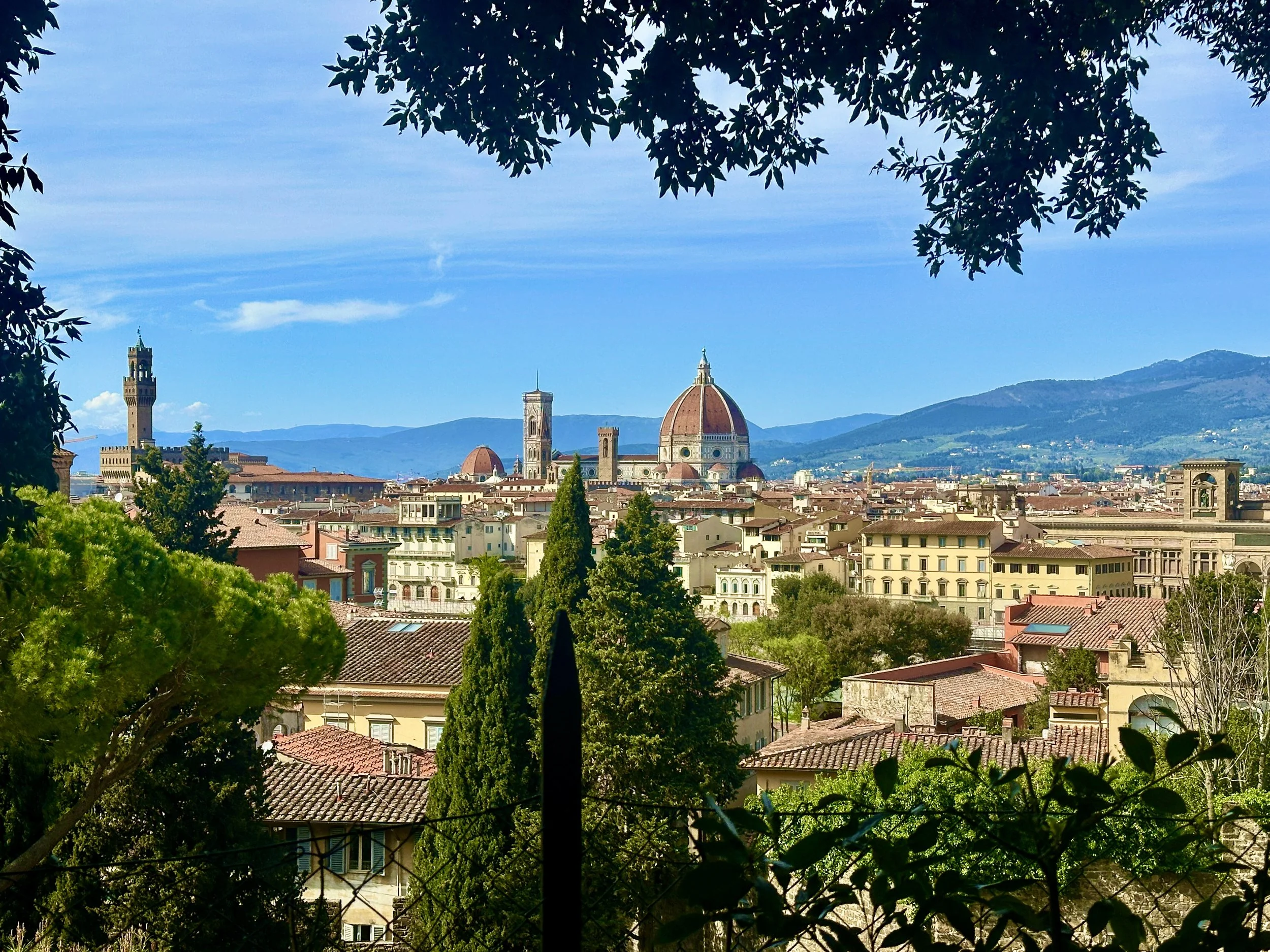
Autumn can be one of the most rewarding times to visit Italy. The intense heat of summer begins to fade, the crowds gradually thin, and the pace of travel becomes more comfortable. Days are often mild enough for long walks, while cooler evenings invite leisurely meals and a slower rhythm.
But autumn also presents an interesting choice: should you spend your time exploring Italy's great cities, or head into the countryside, where vineyards, olive groves, and medieval towns take on a different character as the seasons change?
Both have their appeal. The better choice depends on when you travel, what you hope to experience, and how much time you have.
The case for Italy's cities
There is something particularly appealing about exploring an Italian city when walking no longer feels like an endurance test.
In Florence, the cooler temperatures make it easier to wander beyond the familiar route between the Duomo, Piazza della Signoria, and Ponte Vecchio. You can spend a morning in a museum, cross the Arno to explore the streets of Oltrarno, and still have the energy to enjoy the city in the evening.
The same principle applies to Rome, Bologna, and Venice. Autumn lends itself to cities best experienced on foot, where much of the pleasure comes from moving between neighborhoods, stopping for coffee, and discovering places you might otherwise hurry past.
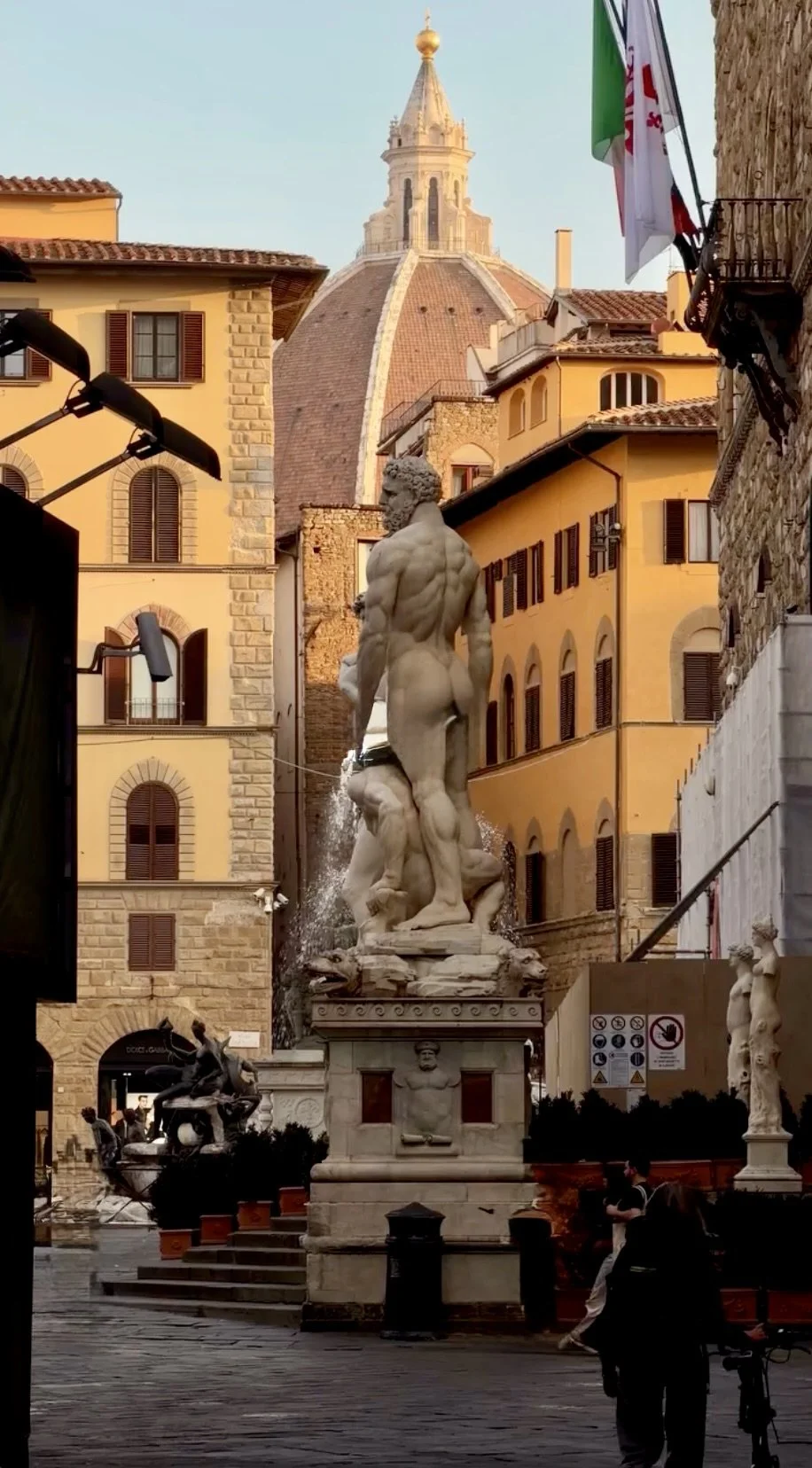
Cities also offer a practical advantage as the season progresses. Museums, churches, markets, and restaurants provide alternatives when the weather turns. A rainy afternoon in Florence can be spent at the Uffizi or in a small café without feeling that the day has been lost.
Of course, autumn does not mean empty streets. Florence and Rome remain popular well into October, and major attractions can still attract considerable crowds, even if they thin out after summer.
Choose the cities if your priorities are art, architecture, history, and the pleasure of exploring on foot. They are also the more dependable choice for a late-autumn trip, when daylight becomes shorter and rain more likely.
The case for the countryside
The Italian countryside offers a different reason to travel in autumn. Rather than simply providing an escape from the cities, the season becomes part of the experience itself.
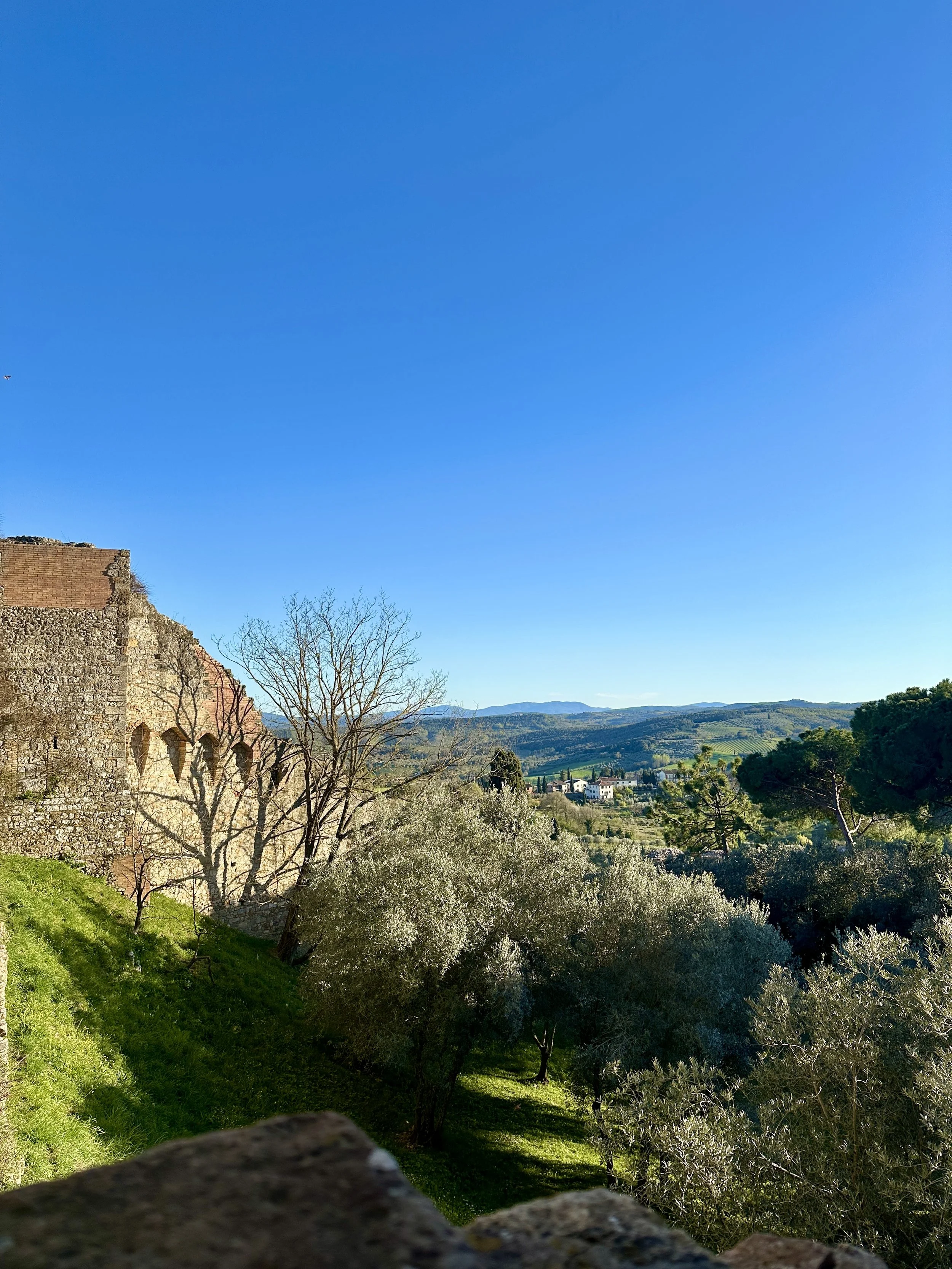
In Tuscany, vineyards begin changing color, olive groves stretch across the hills, and the agricultural calendar shapes local life. The grape harvest usually takes place in late summer and early autumn, followed by the olive harvest later in the season. Chestnuts, mushrooms, and truffles find their way onto seasonal menus.
The landscape is not just beautiful at this time of year. It is a working landscape, and autumn provides an opportunity to appreciate the traditions that have shaped it.
Consider the area surrounding Siena and San Gimignano. A few days based in the countryside allow time to explore hill towns, visit a winery, enjoy a long lunch, and appreciate the landscape without turning each day into a race between destinations.
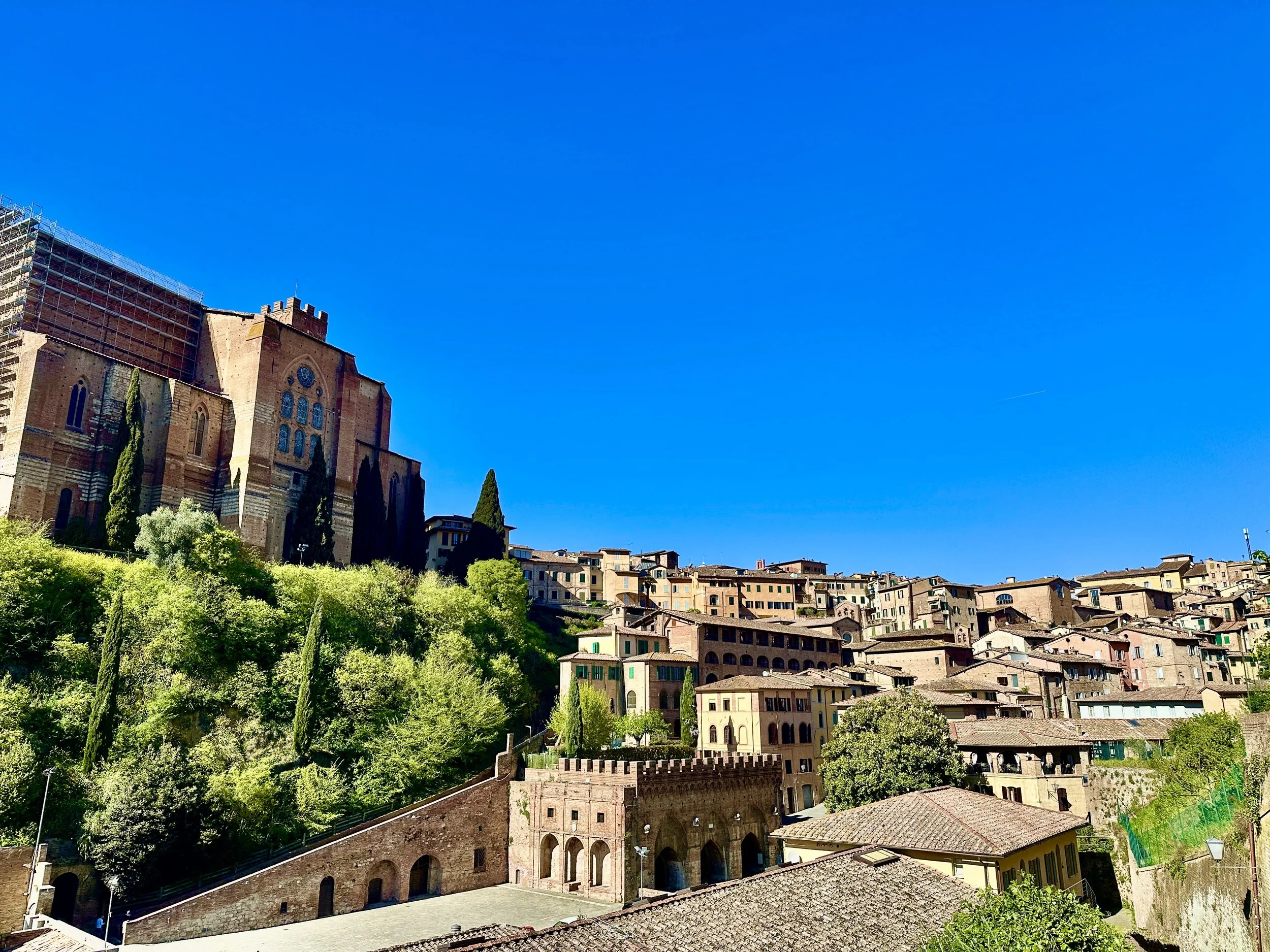
Siena deserves time in its own right. Its medieval streets, distinctive neighborhoods, and remarkable Piazza del Campo reward wandering without a rigid schedule. San Gimignano, meanwhile, offers a striking example of how a town and its surrounding landscape can be experienced together.
Staying in the Tuscan countryside
One of the pleasures of visiting Tuscany in autumn is choosing accommodation that becomes part of the experience, rather than simply somewhere to return at the end of the day.
A vineyard stay or countryside estate can provide a wonderful base for exploring nearby towns while leaving time to enjoy the setting itself. You might spend the morning wandering Siena's medieval streets, enjoy a leisurely lunch in a village, and return to your accommodation for a glass of local wine overlooking the hills.
In the Chianti Classico region, Borgo San Felice, a beautifully restored medieval hamlet surrounded by vineyards, offers an elegant introduction to Tuscany's winemaking traditions. For travelers seeking a more secluded countryside retreat, Borgo Pignano, a historic estate near Volterra, offers another approach, with thoughtfully restored accommodations, estate-grown produce, and a landscape that invites exploration.
Both illustrate why it can be worth spending several nights in one place rather than moving from town to town. The countryside becomes more than a collection of destinations; it becomes part of the journey.
The challenge is that countryside travel requires more planning than a city break.
A car is often the most practical way to reach smaller villages, wineries, and rural accommodations. Distances can appear short on a map, but narrow, winding roads make travel slower than expected. Some rural restaurants and accommodations also reduce their operating days as autumn progresses.
Weather matters more here, too. A day of persistent rain may have little effect on a city itinerary, but it can substantially change plans built around scenic drives, outdoor dining, and vineyard visits.
Choose the countryside if you want a slower, more landscape-focused trip, particularly in September or October. It is especially appealing for travelers who enjoy food, wine, small towns, and spending time in one place rather than moving constantly.
The month matters as much as the destination
Not all of autumn offers the same travel experience.
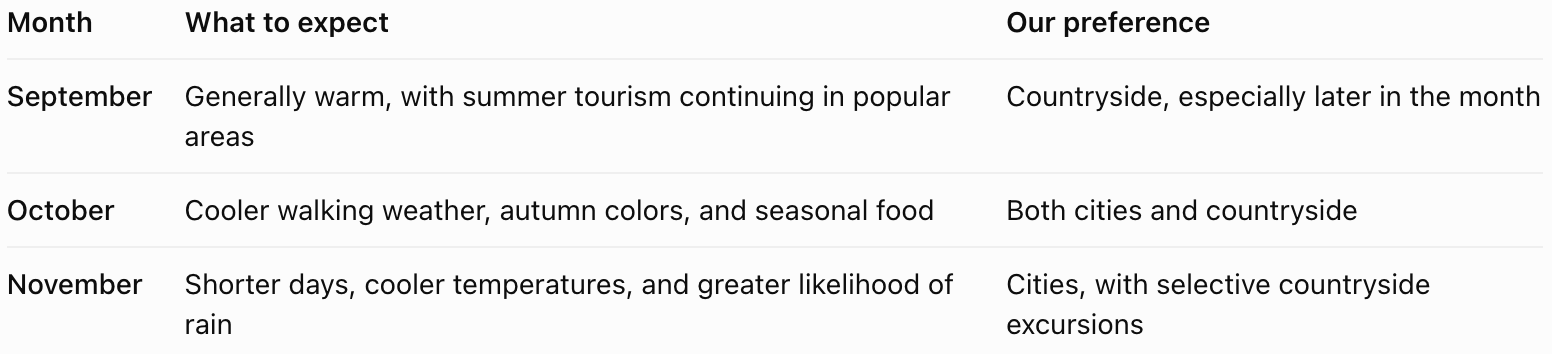
October is arguably the most versatile month. It offers a good balance for travelers who want to combine cultural sightseeing with time outdoors, although the weather becomes less predictable as the month advances.
November can still be rewarding, especially for travelers interested in museums, restaurants, and everyday urban life. But it is less suited to an itinerary that depends on long afternoons exploring rural landscapes.
These patterns vary by region. Northern Italy's lakes and Alpine valleys, the hills of central Italy, and the warmer south do not experience autumn in quite the same way.
What if you want both?
For many travelers, combining city and countryside is the most satisfying approach, provided the trip is long enough to do both well.
Florence and the Tuscan countryside make a particularly natural pairing. A stay in Florence offers access to extraordinary art, architecture, and urban life, while a few days near Siena or in the Chianti countryside introduce a different pace.
The key is to avoid trying to experience the countryside entirely through a succession of rushed day trips.
Visiting Siena and San Gimignano from Florence is certainly possible. But there is a difference between arriving in a town with several hours before returning to the city and staying nearby long enough to enjoy an unhurried dinner or a quiet morning before the day's visitors arrive.
For a week in Tuscany, three or four nights in Florence followed by three nights in the countryside can create a satisfying balance. For a shorter trip, however, it may be wiser to choose one base and explore selectively rather than spend valuable time changing accommodations.
The goal is not to see the greatest number of places. It is to give each part of the trip enough time to reveal its character.
So, which should you choose?
If you're visiting Italy for the first time and have limited time, the cities are often the stronger starting point. They provide a rich introduction to the country's art, history, and daily life, with relatively straightforward transportation and plenty to enjoy regardless of the weather.
If you have visited before, or if your idea of a good holiday centers on long lunches, wine, small towns, and landscapes, autumn in the countryside may be more appealing.
And if your schedule allows, October offers a compelling opportunity to enjoy both.
Ultimately, the advantage of traveling to Italy in autumn is not simply that there may be fewer people or more comfortable temperatures. It is that the season creates room for a different kind of trip: one with more time to walk, linger, and appreciate the character of a place.
The decision between cities and countryside is less about which is better, and more about which experience you want to make time for.
Planning an autumn journey to Italy? The Field Guide creates personalized itineraries that balance the places you want to see with the time and space to enjoy them.