A Weekend in Washington
Washington is often the backdrop for someone else's ambitions. This is a weekend for noticing what the city looks like when nobody is performing.
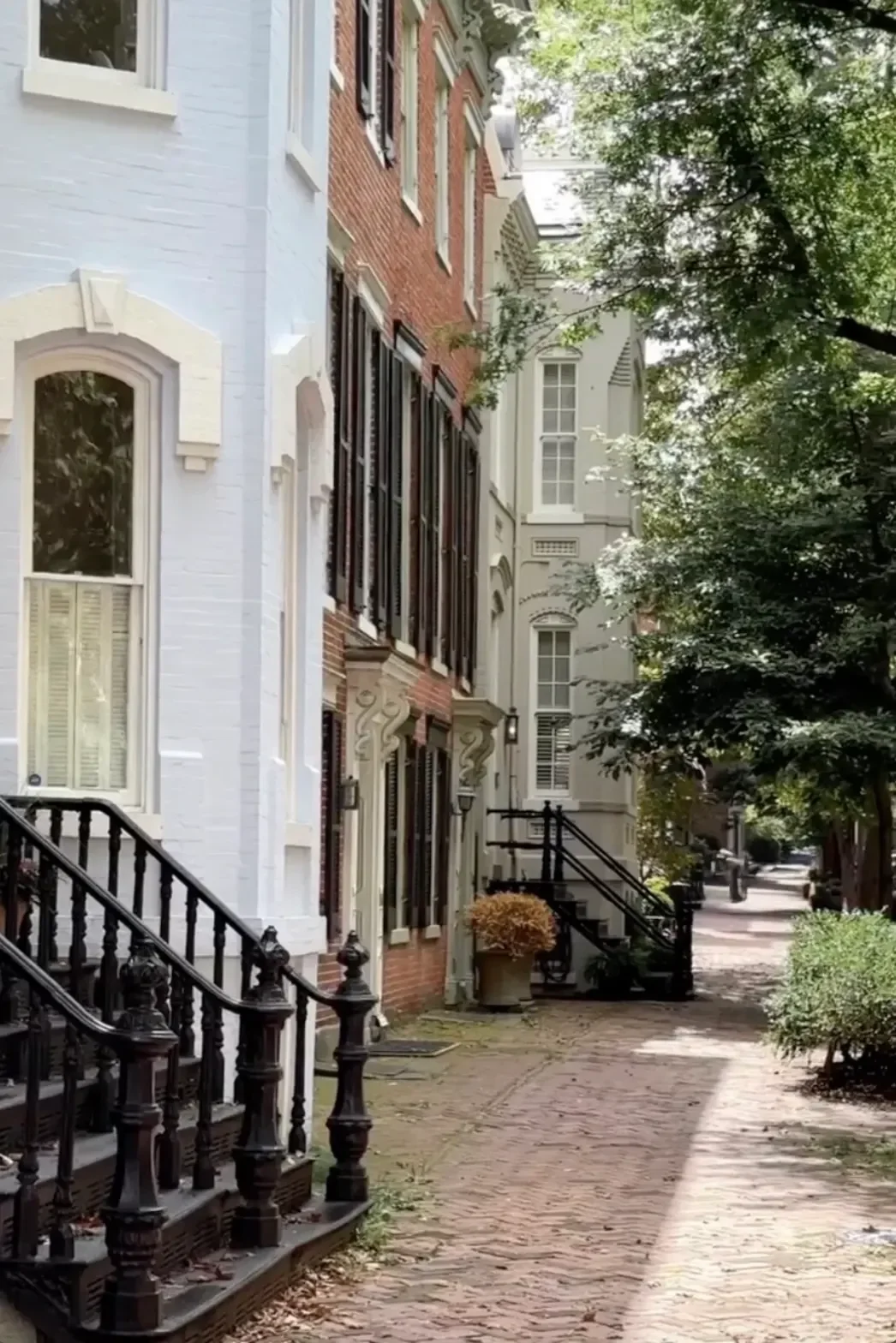
Georgetown, Washington DC
Washington is often introduced through its monuments. It’s easy to understand why — the city was designed to be read from above, a surveyor’s diagram of civic intention, all radial avenues and deliberate sight lines.
But Washington existed long before Pierre Charles L’Enfant drew his famous plan in 1791. The Nacotchtank people had already established communities along these same banks — in Tohoga, the settlement that would become Georgetown, along the Anacostia River, and on the island now called Theodore Island, once Analostan. They were a trading community, which means they understood this particular confluence of waterways as a place worth gathering. The city that came after them inherited that geography and built something very different on top of it.
Two days won’t reveal everything about Washington. But they might help you begin to understand its many layers. This itinerary isn’t about seeing everything. It’s about beginning a relationship with a city — one neighborhood, one conversation, one leisurely walk at a time.
Saturday
Georgetown
Begin in Georgetown, early, before the shops fill. Walk from wherever you’re staying — or take the Metro to Foggy Bottom–GWU and continue on foot — and arrive through the side streets rather than M Street. Georgetown works best before 9am, when it still belongs to the people who live there: the woman unlocking the florist, someone reading on a stoop, the particular quiet of a neighborhood that has decided, collectively, not to hurry yet.
Stop for coffee at Patisserie Poupon on Wisconsin Avenue, or try Flor Café and Books on Prospect Street — a bookshop and café sharing a room, the combination that makes a traveler feel immediately at home in a city. Get something to eat. Sit down properly. Don’t start moving again until you’re ready.
Then walk without a destination. Notice the narrow alleyways off P Street and Dumbarton. The ivy-covered walls. The small gardens visible through iron gates. Georgetown’s architecture is borrowed European rowhouse design, transplanted onto the Potomac — it was built by people who wanted to signal permanence, who wanted to look like somewhere that had always existed. The impulse has never entirely left the neighborhood, which is part of what makes it worth spending a morning in.
By lunchtime, you’ve earned a proper meal. Yellow brings Palestinian flavors to Georgetown with remarkable generosity and warmth — wood-fired pita sandwiches, creamy hummus, pastries that are worth the queue. La Bonne Vache, a few steps down Prospect Street, offers the slower rhythm of a neighborhood French bistro and, in my opinion, one of the city’s best burgers. Choose whichever suits your mood, but linger. The goal isn’t simply to refuel — it’s to allow the neighborhood to unfold around you a little longer.
Then head back up Wisconsin Ave. to spend the afternoon at Dumbarton Oaks.
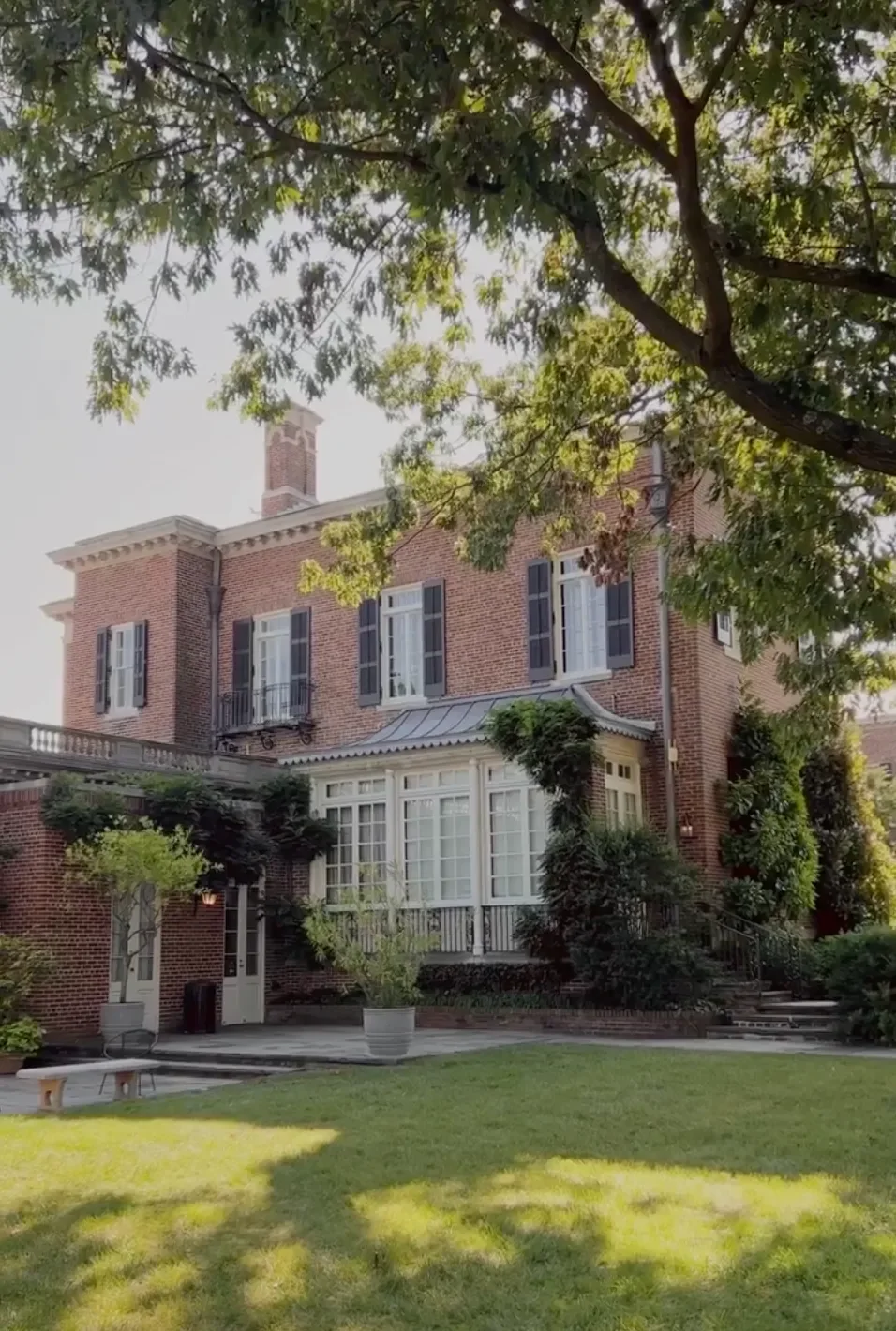
Dumbarton Oaks, Georgetown
The museum occupies the former home of Mildred and Robert Woods Bliss, whose remarkable collection of Byzantine and Pre-Columbian art still feels more like visiting a thoughtful collector than a grand institution. The scale encourages lingering. So do the gardens, designed by Beatrix Farrand, which unfold across sixteen terraced acres and are among Washington’s quietest masterpieces. Since I moved here in 2022, I’ve made it a spring tradition to visit — the lush grounds and blooming flowers make it easy to forget, for an hour or two, that you’re in a capital city. This is the kind of place that rewards curiosity more than efficiency. Resist the urge to rush. Sit on a bench. Walk the gardens twice. Let yourself leave having seen less than you planned.
On your way back down toward the water, walk the C&O Canal towpath. This is not a scenic attraction. It was built as freight infrastructure and retains that unglamorous quality — overgrown, unpretentious, designed for moving goods rather than impressing anyone. Walk along it for twenty minutes. Nobody is performing for anyone. In a city where much of the built environment was designed with an audience in mind, that quiet practicality is worth noticing.
For the evening, make your way to Chez Billy Sud on 31st Street. Before you sit down to dinner, stop first at Le Bar à Vin next door and let the day start settling around you. When you’re ready, move next door for dinner proper. Provençal cuisine, warm lighting, the particular ease of a room that has been doing this for a while. It’s a good place to end a Saturday.
Sunday
Capitol Hill
Washington’s split personality is easiest to see on Capitol Hill, and the best way to understand it is to arrive before the political day begins. Start with breakfast.
Jimmy T’s Place on East Capitol Street is a cash-only, family-run diner with counter seating and booths — the kind of neighborhood institution that exists simply because the neighborhood needs it. Order the omelet. Read the newspaper. Talk to whoever sits beside you if they’re inclined to talk. The Second Address on Massachusetts Avenue NE offers a completely different morning. Set inside a beautifully restored townhouse and named for Lincoln’s Second Inaugural Address, it sits at the literal intersection of the political and the personal: the Supreme Court in one direction, row homes and neighborhood playgrounds in the other. Both are true simultaneously, which is a very Capitol Hill thing.
From breakfast, walk toward Eastern Market. Markets tell you what a neighborhood eats, which tells you who lives there, which tells you more than most monuments ever could. The indoor market has been operating in some form since 1873. Outside, farmers unload produce, florists arrange bouquets, and neighbors stop to chat while collecting what they need for the week. Pay attention to that rhythm. A market built for residents moves differently than one built for visitors.
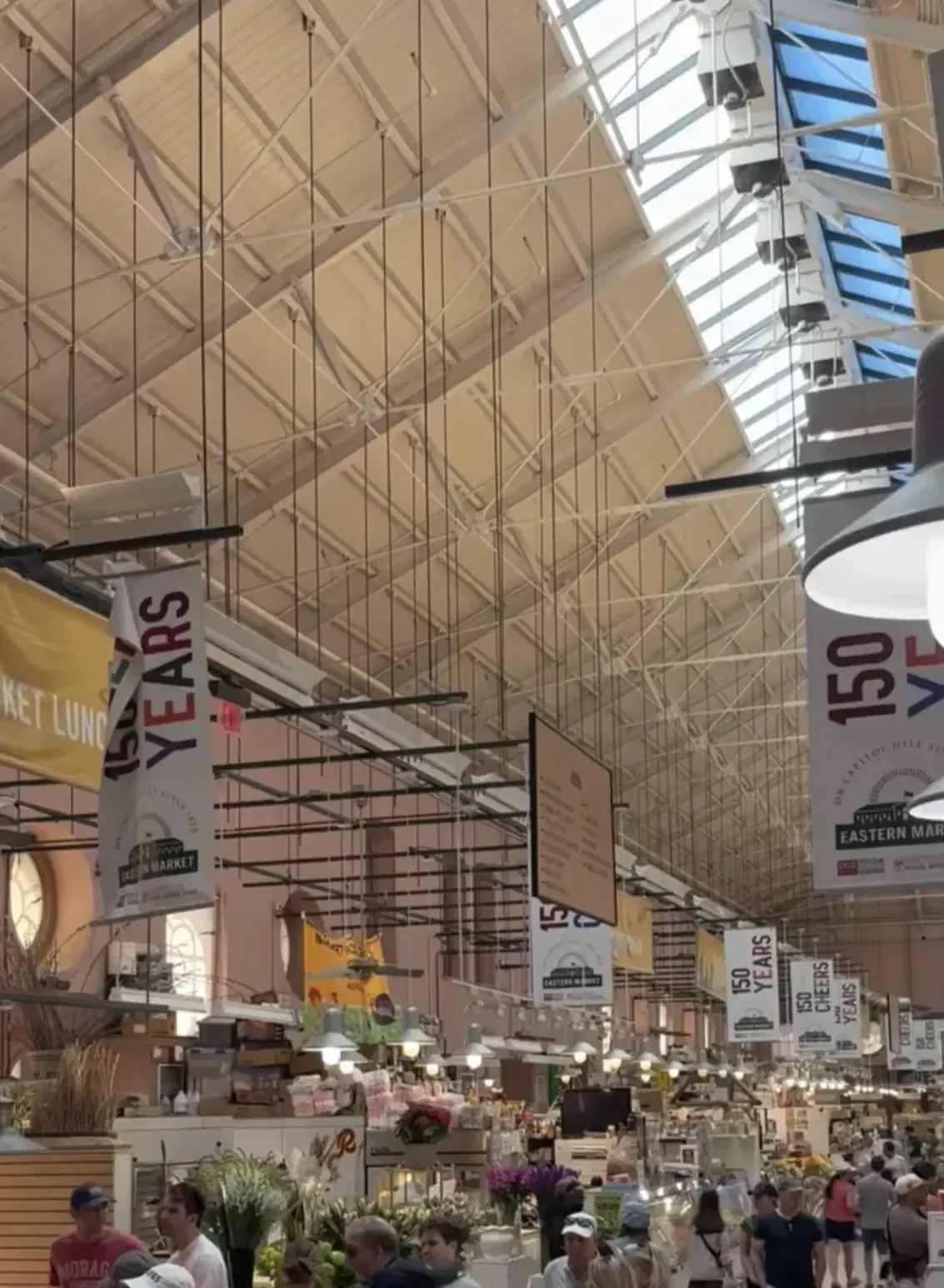
Eastern Market, Capitol Hill
From Eastern Market, resist the temptation to turn toward the Capitol. Walk the other way. The residential streets are where Washington begins to feel less like the nation’s capital and more like someone’s home. Brick row houses sit shoulder to shoulder beneath mature trees. Children’s bicycles lean against iron fences. Someone is tending a front garden. Someone else is walking home carrying groceries. The Capitol dome remains visible in the distance, but it no longer dominates the experience. This is one of Washington’s defining qualities. The monumental city and the neighborhood city are never very far apart. They exist side by side, and understanding both is part of understanding Washington.
Keep wandering until hunger gives you permission to stop. Choose somewhere that encourages you to linger before making your way west toward the Lincoln Memorial.
If there’s one monument in your weekend, let it be the Lincoln Memorial — and visit at dusk rather than midday. The building won’t change. The crowd will. Evening empties it of tour groups and fills it with runners, couples, friends talking on the steps, and people walking home after work. Washingtonians use their monuments the way people in other cities use parks: as furniture rather than spectacle. Let that be the image you carry into dinner. Choose somewhere in Foggy Bottom or the West End and let the conversation linger a little longer. The weekend has earned a good meal.
Two days won’t teach you everything about Washington. They were never meant to.
But if you leave remembering the rhythm of Eastern Market, a bench at Dumbarton Oaks, and the Lincoln Memorial at dusk, you’ll have discovered something more valuable than a checklist.
You’ll have begun a relationship with the city.
And that’s enough reason to return.
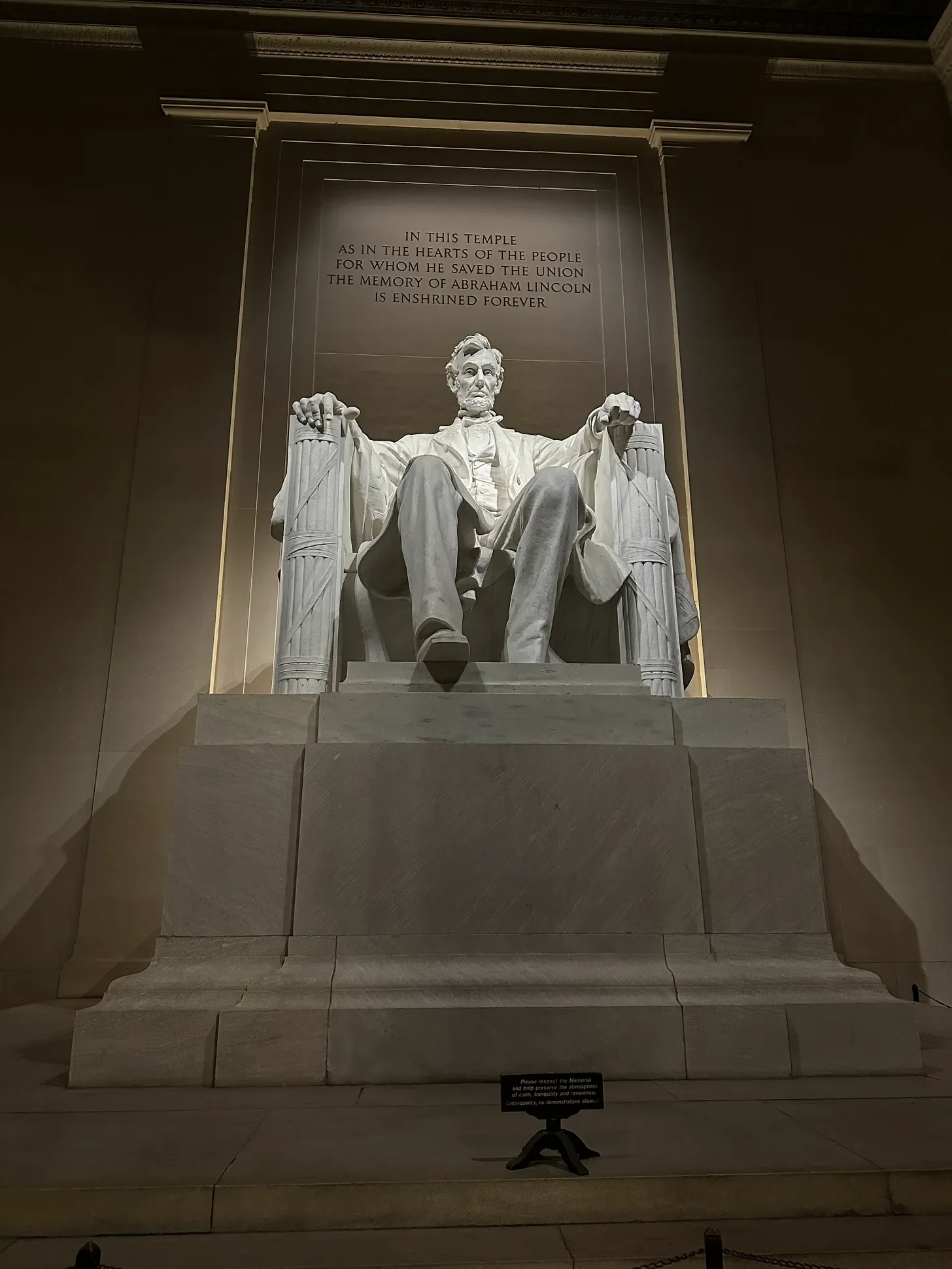
Lincoln Memorial, Washington, DC
Getting around — Washington’s Metro is safe, clean, reliable, and covers most of what’s here. Use it for the longer cross-city moves — Foggy Bottom–GWU to Capitol Hill is a straightforward ride on the Blue, Orange, or Silver lines. Walk everything within a neighborhood. I like using the Citymapper app to get around on the metro and check for disruptions.
The Addresses
Patisserie Poupon — 1645 Wisconsin Ave NW, Georgetown.
Flor Café and Books — 3203 Prospect St NW, Georgetown.
Yellow — 1524 Wisconsin Ave NW, Georgetown. Reservations recommended.
La Bonne Vache — 3265 Prospect St NW, Georgetown. No reservations.
Dumbarton Oaks — 1703 32nd St NW, Georgetown. Museum free; gardens require advance timed ticket.
Chez Billy Sud / Le Bar à Vin — 1039 / 1035 31st St NW, Georgetown. Bar à Vin: no reservations required. Bistro: reservations recommended.
Jimmy T’s Place — 501 East Capitol St SE, Capitol Hill. Cash only.
The Second Address — 303 Massachusetts Ave NE, Capitol Hill.
Eastern Market — 225 7th St SE, Capitol Hill.